

Born to Inherit and Pass On!
or “The Salt Must Come Out of the Shaker!”
by Friedhelm Holthuis, President of the BFP (Federation of Free Pentecostal Churches in Germany) and Senior Pastor of Credo Church
Co-author: Mari Schmidt
When I was asked to write something on the topic of “God’s inheritance,” I wondered whether I should write about what I have spiritually inherited as a Christian or what I hope to pass on one day. As I reflected on this, I realized: In a way, the two are inseparable. We receive God’s inheritance not only for ourselves, but so that we may pass it on.
Jesus Himself said in the Gospel of John:
“I tell you the truth: Whoever believes in me will do the same works as I do—and even greater ones; for I am going to the Father. Whatever you ask in my name, I will do, so that the Father’s glory may be revealed through the Son.” (John 14:12–13; HFA)
Sometimes Christians feel like a minority and overlook the fact that this minority belongs to the most successful group of people that has ever existed: the Church of Jesus Christ, which has been marching victoriously for more than 2,000 years. After so many years, it is still alive. The secret is not us at all—the secret is Jesus. He and His position show us what we have received as heirs and what our mission is. This knowledge must be “passed down,” just as Joseph’s bones were passed down from generation to generation until they reached their destination (cf. Joshua 24:32).
Our Heritage Through Jesus
When Jesus promises that we will do greater things, we must ask ourselves what Jesus did and what that means for us. Jesus came into the world because the Creator finally wanted to live in relationship with us. He loves people and that is the core of our heritage: to love people, and even more than that, to love “all people.” Herein lies our challenge: our community! Often, in the midst of conflicts and disputes, I’m asked what the solution might be—the solution is to love people, because no matter who leaves the church, there will always be someone who doesn’t fit in with us. At one point, Jesus said to Peter, “Get behind me, Satan!” (Matthew 16:23; HFA)—but that didn’t mean Jesus no longer loved him; rather, Jesus knew which path he would take “out of love for all people.” Once we’ve clarified this point for ourselves—that we are called to love all people, not just those we like—we can begin to consider what our legacy looks like.
What do we inherit? And do we live out our inheritance?
The story of the forgiving father in Luke 15:11–32 shows us what we have actually inherited. In the story, the father divides up the inheritance while he is still alive. One son leaves home; the other stays. The older son’s angry reaction to the younger son’s return shows that he did not understand his position or his inheritance.
He had completely forgotten what verse 12 describes: “So the father divided his estate between the two of them.” (Luke 15:12; HFA) As the firstborn, the older son had even received two-thirds of the estate… and had not “lived it.” He had had access to all of his father’s resources the whole time—and apparently had neither been aware of them nor made use of them.
How about us—do we know our inheritance? Are we living it? What do we expect from the inheritance that, in Jesus’ words, holds “even greater works”?
Passing on a Spiritual Inheritance
The fact that I walk with Jesus and serve Him is a divine calling and an “inheritance” from various people. My mother prayed that I would come to Christ; Nigel Sheldrick believed in me; Friedrich Nußbächer married us and supported us financially. Uwe Schäfer believed in us—without him, we wouldn’t be where we are today! Werner Gunia, my regional director, gave me opportunities to preach. Manfred Lanz provided me with friendly support and pastoral guidance; Christian Knorr, Bob and Anke Stübner, and Petra Alvarez-Munoz challenged me immensely in my leadership role. Andrew Evans has walked alongside me without my ever having met him. Johannes Justus prepared and supported me exceptionally well on the BFP board, and last but not least, without my wife, I wouldn’t be where I am today. All of these companions instilled something in me and shaped me during their lifetimes. Just as they left a legacy within me, so too should my life be a testimony. I want to have faith in people, to strengthen and encourage them. When I invest in God’s kingdom, I have a share in something that extends beyond my lifetime.
What do we want to leave as a legacy?
When we think of our children and the next generation, we should ask ourselves: What do I want to pass on? Are possessions, fame, and power important, or do we want to share the moments when God intervened, provided for us, or protected us? Our own stories are worth telling. Children’s church services shape young people. And children are our future: mayors, politicians, teachers, and tradespeople. The younger generation thirsts for our living testimonies. I am certain: When we live out what we believe, others will believe what we live out. Through our living example, they will become people who bear witness in their workplaces.
Let’s make sure we build preschools and schools that educate our children to become articulate individuals. It’s not just Christians who will appreciate the values that a Christian education brings. In my experience, parents apply because they want their children to receive a values-based education, regardless of their own beliefs!
Bringing the Legacy to Life
It’s not about what I want to pass on, but what Jesus wants me to pass on. As in the parable of the talents (see Luke 9:11–25), I am a steward of His legacy and should add what Jesus would add. Jesus’ “last will” (see Mark 16:15) is not a command but an authorization—because He knew we are capable of it. That doesn’t mean we have to stand on street corners and shout the Gospel to the world—everyday acts are enough: for example, letting the woman with the overflowing shopping cart go ahead of us—because she needs every second to manage her large family. Let’s get creative with “good deeds.” Let’s always be kind, knowing that Jesus loves that person—even if it’s the neighbor no one likes—because it was precisely for that person that Jesus went to the cross. Let’s be different—without being creepy—let’s just start and see what happens. We can only let the salt that we are (cf. Matthew 5:13) be effective when it comes into contact with food—because salt is a flavor enhancer.
The salt has to come out of the shaker! So if we want to be “good stewards,” let others feel it, no matter who they are—we often know so little about them! Maybe it’s your smile, of all things, that brightens their day. Maybe that’s exactly what prompts them to ask what’s different about us—and then we can talk about the reason: the love that has set us free through the inheritance of Jesus!
***
Source: BFP
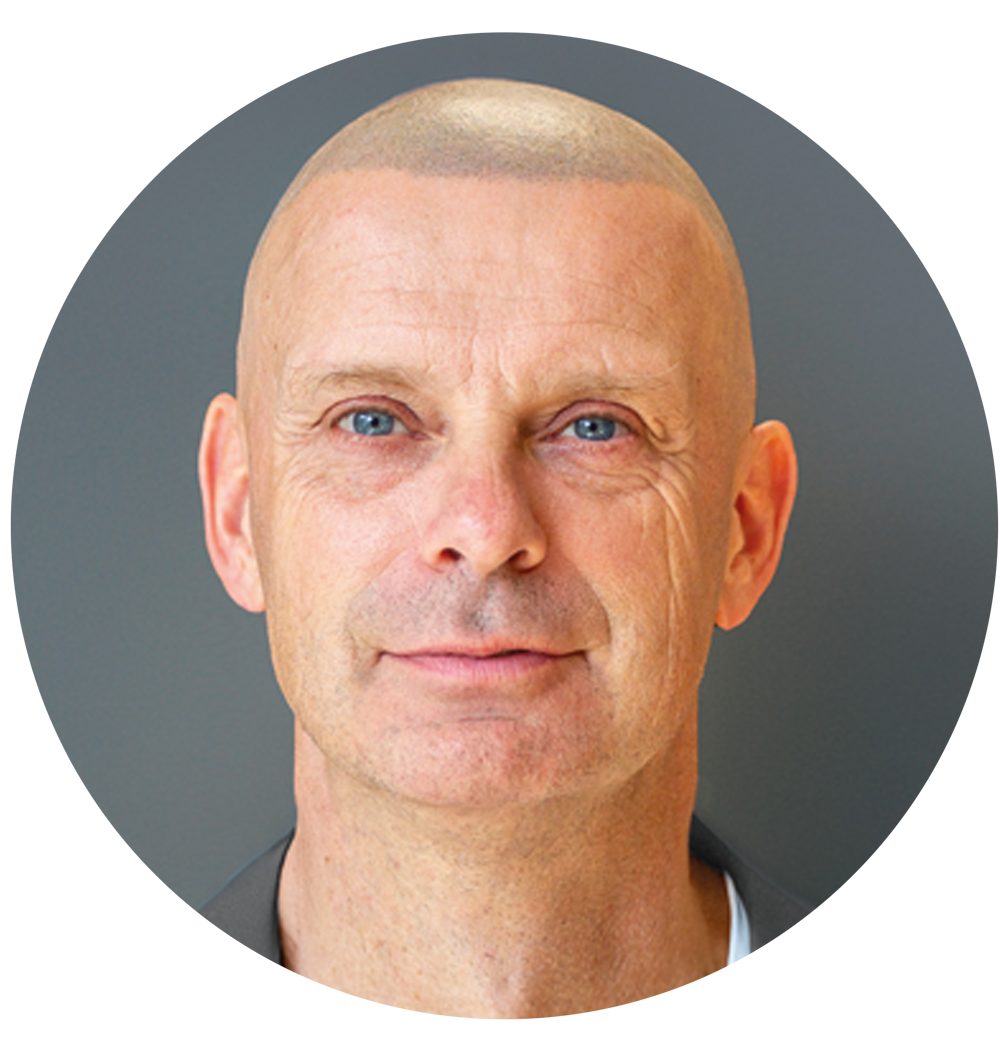
About the Author: Pastor Friedhelm Holthuis (born in 1971), married to Elke, with three children. He is senior pastor of Credo Church, a congregation with seven locations. A matter close to his heart is building relevant, multiplying churches. Since September 2022, Friedhelm has been President of the BFP. He is also Chairman of the Assemblies of God in Europe and Vice-Chairman of the Pentecostal European Fellowship.
***